
Buttock Lift and Brazilian Liposculpture in Beverly Hills: Why the Best Result Is Not the Biggest One, and How Your Own Fat Gets You There
The goal that most patients bring to a buttock lift consultation is not, despite the cultural noise around this procedure, simply a bigger backside. It is a better one. A shape that transitions smoothly from the waist to the hip. A projection that reads as natural rather than augmented. A lateral silhouette that looks proportionate rather than disproportionate to the rest of the body. And a result that comes from the patient’s own biology rather than from a foreign device.
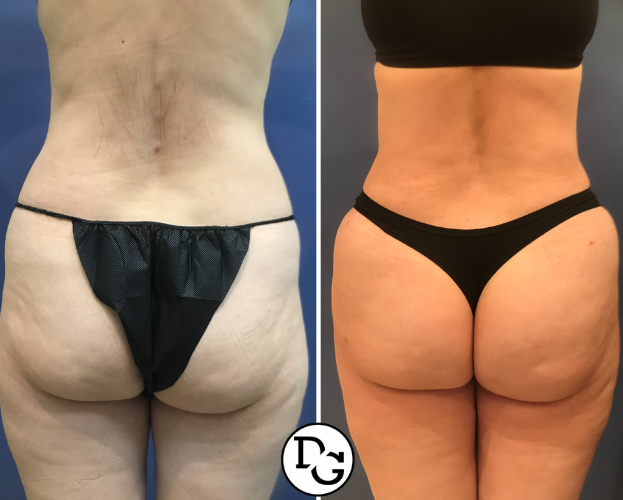
Buttock lift and Brazilian liposculpture in Beverly Hills with Dr. Daniel Golshani addresses exactly this. By harvesting the patient’s own fat from areas of excess through precise liposuction, processing it using the proprietary G-Stem technique to concentrate the regenerative stem cell component, and placing it with anatomical precision in the gluteal region, Dr. Golshani reshapes the buttock and the body simultaneously. The waist narrows. The hip curve fills. The buttock gains projection and shape. And the result is natural because the material producing it is the patient’s own tissue.
This is the Brazilian liposculpture distinction: not just adding volume to the buttock, but reshaping the entire waist-hip-buttock relationship as a coordinated anatomical unit.
What Brazilian Liposculpture Actually Does and Why It Works
The term Brazilian Butt Lift, or BBL, has entered cultural consciousness in a way that has slightly distorted what the procedure actually involves. It is not technically a lift. It does not surgically reposition descended buttock tissue the way a breast lift repositions descended breast tissue. What it does is add volume, through the patient’s own fat, to the upper and lateral buttock quadrants, creating the appearance of a lifted, rounder, more projected shape.
The Brazilian liposculpture name is more precise because it captures the complete procedure: the liposuction harvest that simultaneously slims the donor zones, and the fat transfer that reshapes the recipient zone. The two components work together, and understanding this relationship is why the result of a well-planned Brazilian liposculpture looks more dramatic than the volume placed would suggest in isolation.
When fat is removed from the waist, flanks, lower back, and inner thighs, the body’s lateral silhouette changes. The waist appears narrower. The hip transition becomes more defined. Even before a single cubic centimeter of fat has been placed in the buttock, the surrounding anatomy has already changed in a way that makes the buttock appear more prominent by contrast. The fat placement then builds on this foundation, adding projection and shape to a gluteal region that now sits within a more favorable proportional context.
This is the logic of liposculpture as a discipline: not just adding or removing, but reshaping the relationship between adjacent body zones simultaneously.
The G-Stem Technique: Why Processing Makes the Difference
The clinical results of Brazilian liposculpture depend significantly on what happens to the fat between harvest and placement. Fat cells are fragile. The handling, processing, and placement technique determine what proportion of the transferred cells survive to establish a blood supply and integrate permanently at the recipient site.
Dr. Golshani’s proprietary G-Stem technique goes beyond standard fat processing. Rather than standard centrifugation alone, the G-Stem method specifically concentrates the adipose-derived stem cells within the processed fat before transfer. These stem cells, naturally present in adipose tissue, play a central role in angiogenesis, tissue repair, and the overall biological integration of the graft at the recipient site.
The clinical result is twofold: a higher proportion of the transferred fat survives long-term, and the regenerative activity at the recipient site produces improvements in tissue quality and skin texture over the treated area. Patients who undergo G-Stem fat transfer frequently notice that the skin quality over the treated buttock zones improves in the months following surgery, reflecting the stem cell activity in the integrated graft rather than volume alone.
This is what distinguishes the G-Stem approach from standard BBL processing. For a full explanation of the G-Stem technique, see the Breast & Body Contouring with Autologous Fat Transfer page.
The Surgical Approach: What Dr. Golshani Does and How
Donor site liposuction. The procedure begins with tumescent infiltration of the planned donor zones. Fat is most commonly harvested from the abdomen, waist, flanks, lower back, and inner thighs, the zones where excess fat most directly improves body proportion when removed, and where the harvest produces the best quality fat for transfer. The liposuction is performed with controlled, anatomically precise technique through tiny access incisions that heal to near-invisibility. The donor site result is a meaningfully slimmer, more defined waist and lateral body contour.
Fat processing. The harvested fat is processed using the G-Stem technique to remove blood, tumescent fluid, and cellular debris while concentrating the viable adipocytes and the regenerative stem cell fraction. The quality of this step directly determines the long-term survival of the transferred fat.
Fat placement. The processed fat is placed in the buttock through small access incisions using blunt cannulas, in controlled micro-aliquots distributed throughout the planned recipient zones. Placement is performed in the subcutaneous plane, above the gluteal muscle, in a systematic, layered pattern designed to maximize contact between the transferred fat and the surrounding tissue vasculature.
The safety imperative of subcutaneous placement. Dr. Golshani performs all buttock fat grafting strictly in the subcutaneous plane. Deep intramuscular or sub-fascial injection of fat into the gluteal region is associated with a risk of fat embolism, a serious and potentially fatal complication that has driven the surgical community’s adoption of strict subcutaneous-only placement protocols. This is non-negotiable in Dr. Golshani’s practice, and it reflects the current safety standard of the field.
Shaping the result. Volume placement is distributed to produce the specific shape the patient came for: upper quadrant fullness that creates the lifted appearance, lateral fullness that fills the hip transition, and central projection that produces the characteristic rounded profile. The distribution is calibrated to the patient’s existing anatomy, their skin quality and elasticity, and the specific proportional improvement that will produce the most natural and balanced result for their body.
The Buttock Lift: When Skin Excess Requires More Than Fat Transfer
For some patients, particularly those who have lost significant weight or whose skin quality has deteriorated with age, the concern is not just volume but position. The buttock has descended, the skin is lax, and the shape reads as flat and ptotic rather than simply lacking projection. In these patients, fat transfer alone adds volume to a structure that has not been repositioned, which can produce a heavier-looking rather than lifted result.
A surgical buttock lift, in which excess skin is removed and the buttock tissue is repositioned and suspended at a higher, more anatomically correct position, addresses ptosis directly. The incision is typically placed along the upper buttock crease or across the lower back where it is concealed by underwear and swimwear. The buttock tissue is elevated, excess skin is excised, and the shape is internally supported.
The buttock lift and fat transfer are frequently combined in the same surgical session: the lift repositions and supports the tissue, and the fat transfer adds the volume and contour that the lift alone does not provide. For post-bariatric patients with significant buttock ptosis and skin excess, this combined approach is often the most comprehensive path to the result they are looking for. More detail on this is available on the Post-Weight Loss Body Sculpting page.
Who Is and Is Not a Good Candidate
Brazilian liposculpture is not the correct procedure for every patient who wants a better-looking buttock. Dr. Golshani is direct about this during every consultation.
Good candidates share these characteristics. They have adequate donor fat available for harvest at one or more sites. They are at a stable weight within a reasonable range of their goal, since operating on a patient who is still actively losing weight produces a fat transfer result that continues to change postoperatively. Their skin quality is sufficient for the subcutaneous graft to produce a smooth, natural contour result. And their goal is proportional improvement of the waist-hip-buttock relationship rather than maximum volume regardless of body proportion.
Patients who are not good candidates include those with insufficient body fat for a meaningful transfer, those whose skin quality is too poor to produce a smooth result without a concurrent lift, those with unrealistic expectations for the degree of augmentation achievable based on their available donor volume, and those who are still actively losing weight.
The honest consultation that establishes these boundaries before surgery is the most important part of the process. Brazilian liposculpture performed on the wrong patient produces disappointment regardless of how skilled the surgeon is. Performed on the right patient with a correctly planned volume and distribution, it produces one of the most transformative and consistently satisfying results in body contouring.
The Result: What Brazilian Liposculpture Actually Changes
A well-executed Brazilian liposculpture produces changes that are visible from multiple angles and that integrate into the overall body silhouette rather than appearing as an isolated augmentation.
From the posterior view: a waist that narrows above a hip that curves, transitioning to a buttock that is rounder and more projected. The waist-to-hip ratio, one of the most consistent markers of body proportionality, improves as the donor zone slimming and the recipient zone filling work together.
From the lateral view: a projection that reads as natural, with a gradual upper slope and a smooth lower transition to the posterior thigh. Not a spherical augmentation that sits incongruously on the back of the body.
From the anterior view: a hip width and lateral contour that is fuller and more curvaceous at the transition zone between the waist and the thigh.
What does not change is the patient’s fundamental body type. Brazilian liposculpture works with the anatomy that exists, reshaping the proportional relationships within it. It is not a transformation into a different body. It is an optimization of the body the patient already has.
When Buttock Lift and Brazilian Liposculpture Are Part of a Larger Plan
These procedures connect naturally to the broader body contouring context:
- Liposuction, High Definition Liposuction & Liposculpture as the foundational technique for both the donor site harvest and the body contouring that frames the buttock result
- Tummy Tuck and Advanced Abdominoplasty in patients where abdominal skin excess accompanies the buttock concern, addressing both the trunk and the posterior in a coordinated plan
- Mommy Makeover combining buttock liposculpture with breast and abdominal procedures for comprehensive post-pregnancy body rejuvenation
- Breast & Body Contouring with Autologous Fat Transfer for patients combining buttock fat transfer with breast or hip enhancement in the same session
- Post-Weight Loss Body Sculpting for patients combining a surgical buttock lift with fat transfer following significant weight loss
- Body Contouring as the broader category within which buttock lift and Brazilian liposculpture sit at Dr. Golshani’s Beverly Hills practice
Why Beverly Hills Patients Choose Dr. Daniel Golshani for Buttock Lift and Brazilian Liposculpture
Brazilian liposculpture is one of the procedures where the difference between a technically adequate result and a genuinely excellent one is most visible. The waist, the hip, and the buttock all read as a single proportional unit, and every decision made about donor site selection, harvest volume, and fat placement affects how that unit looks from every angle. Patients who come to Dr. Golshani for this procedure have typically seen results that fell short of what was promised, and they are looking for a surgeon whose anatomical precision and aesthetic judgment can be trusted to produce something different.
Dr. Daniel Golshani, MD, FACS is a double-board-certified plastic and reconstructive surgeon with advanced training in cosmetic surgery and extensive experience in buttock augmentation and liposculpture. His G-Stem fat processing technique, developed to concentrate the regenerative stem cell component of harvested adipose tissue, produces higher-quality, more biologically integrated fat transfer results than standard processing achieves. His strict adherence to subcutaneous-only placement protocols reflects his commitment to patient safety as a non-negotiable foundation of every procedure he performs.
Beverly Hills patients who come to Dr. Golshani for Brazilian liposculpture arrive with a specific standard in mind. They want a result that looks proportionate, not augmented. Natural, not surgical. Better, not different. Dr. Golshani’s approach to every buttock lift and liposculpture case is built on exactly that standard: a waist, hip, and buttock relationship that looks like it was always meant to look this way.
His practice at 9301 Wilshire Blvd., Suite 410 in Beverly Hills serves patients from Beverly Hills, Bel Air, Brentwood, West Hollywood, Pacific Palisades, Santa Monica, and internationally.

Your Brazilian Liposculpture Journey: Step-by-Step
Step 1 — The Consultation
Your consultation begins with a detailed assessment of your donor sites, your current buttock anatomy, your skin quality, your body proportions, and your specific goals. Dr. Golshani determines the correct donor zones, the realistic volume achievable based on your available fat, the correct distribution within the buttock, and whether a concurrent surgical lift is indicated. A patient coordinator attends every consultation, recording everything discussed so nothing is lost between your visit and your surgery date.
Step 2 — Preparation
Stopping smoking for at least six weeks before and after surgery, reaching and maintaining a stable weight before proceeding, discontinuing blood-thinning medications and supplements, and arranging your recovery environment including the specific equipment needed to avoid sitting flat during the initial recovery. His team ensures you have everything you need before you arrive.
Step 3 — The Procedure
Brazilian liposculpture is performed under general anesthesia on an outpatient basis at the Rexford Surgical Institute, an accredited surgical center on the same floor as Dr. Golshani’s Beverly Hills office. Tumescent infiltration is performed at all donor sites. Fat is harvested through precise liposuction technique, processed using the G-Stem method, and placed in controlled micro-aliquots in the subcutaneous gluteal plane through small access incisions. The procedure typically takes two to three hours.
Step 4 — Recovery
Avoiding direct pressure on the buttocks for the first two weeks is the most critical component of BBL recovery. Patients use a BBL pillow or cushion when seated, placing weight on the thighs rather than the buttocks, to protect the newly transferred fat during the critical vascularization period. A compression garment is worn over the donor sites. Most patients are socially presentable within ten to fourteen days. Strenuous exercise is restricted for six weeks. The final settled result, with fat fully integrated and swelling resolved, is visible at three to six months.
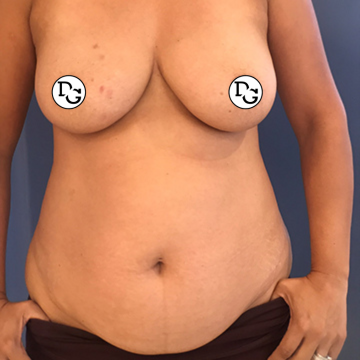
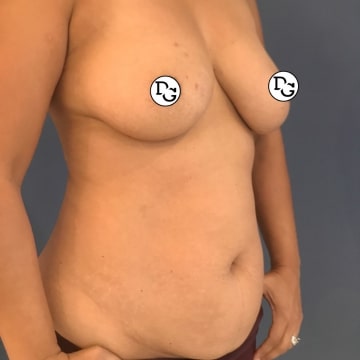
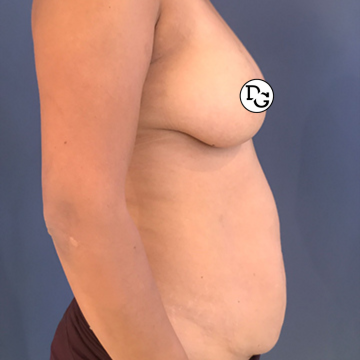
Before
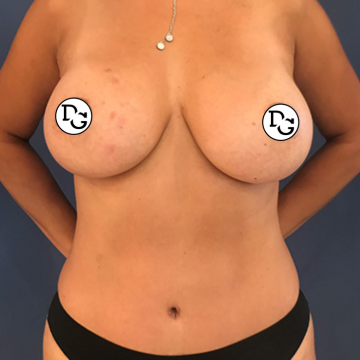
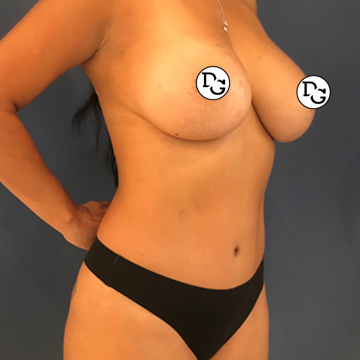

After
Schedule Your Liposculpture Consultation in Beverly Hills
Contact us today to schedule a private consultation with Dr. Golshani to learn how liposculpture can improve your body’s contours.
Frequently Asked Questions About Liposculpture
What is Brazilian liposculpture in Beverly Hills?
Brazilian liposculpture is a body contouring procedure that harvests the patient’s own fat from areas of excess through liposuction, processes it using Dr. Golshani’s G-Stem technique to concentrate regenerative stem cells, and places it in the buttock and hip zones to reshape the waist-hip-buttock relationship simultaneously. The result is simultaneous slimming at the donor sites and natural, permanent enhancement at the recipient zones using only the patient’s own biology.
Is the BBL safe?
Buttock fat grafting is safe when performed with strict subcutaneous placement technique. The serious risks historically associated with the procedure arose from deep intramuscular fat injection, which can introduce fat into the gluteal vascular system. Dr. Golshani performs all buttock fat placement strictly in the subcutaneous plane, above the gluteal muscle, in accordance with current safety guidelines. Patients should always confirm that their surgeon uses subcutaneous-only placement protocols.
How much fat survives after Brazilian liposculpture?
Most patients retain sixty to eighty percent of the transferred fat long-term with the G-Stem technique. Some resorption occurs in the first three months as the body absorbs what has not established a blood supply. The surviving fat is permanent, aging naturally alongside the surrounding tissue. Dr. Golshani calibrates his placement volume to account for expected resorption, arriving at the intended final result after settling.
Will I need to avoid sitting after Brazilian liposculpture?
Yes. Direct pressure on the buttocks must be avoided for the first two weeks following surgery. Patients use a BBL cushion or pillow that transfers weight to the thighs, protecting the newly transferred fat during the critical period when it is establishing its blood supply. After two weeks, normal sitting can gradually resume.
How long do Brazilian liposculpture results last?
The fat that survives integration is permanent. Results are long-lasting provided weight remains stable. Significant weight gain increases the volume at both donor and recipient sites. Significant weight loss reduces it. Maintaining a stable weight after surgery is the most important factor in preserving the proportional result.
What is the difference between Brazilian liposculpture and buttock implants?
Brazilian liposculpture uses the patient’s own fat and produces a result that looks and feels like natural tissue because it is natural tissue. Buttock implants use a silicone device placed within the gluteal muscle, which carries higher risks of implant-related complications including infection, displacement, and capsular contracture. For patients with adequate donor fat, Brazilian liposculpture consistently produces more natural-feeling results with a more favorable safety profile than implant-based augmentation.
What is the recovery time for Brazilian liposculpture?
Most patients are socially presentable within ten to fourteen days. Sitting restrictions apply for the first two weeks. Strenuous exercise is restricted for six weeks. Final results are visible at three to six months.
How much does Brazilian liposculpture cost in Beverly Hills?
Cost varies depending on the number and scope of donor sites, the volume transferred, anesthesia, and surgical facility fees. Dr. Golshani’s team provides personalized estimates during consultation.

